

What’s in Season in November: 2026 Produce Guide and Easy Fall Meal Ideas
There’s something extra cozy about cooking with what’s in season right now. As the days get shorter and the temps start to dip, November’s produce leans toward comfort food (think roasted root veggies, crisp apples, juicy pears, and hearty greens). Shopping for produce in season in November means everything tastes fresher, and it usually costs less, too! Whether you’re making a simple weeknight dinner or prepping for Thanksgiving, here’s what’s fresh and worth grabbing this month, plus how I like to use it as a nutrition consultant (and a mom feeding two boys).
What’s in Season in November at a Glance
- Fruits in season in November: apples, citrus (mandarins and grapefruit), cranberries, figs (early in the month), grapes, kiwis, kumquats, pears, persimmons and pomegranates.
- Vegetables in season in November: beets, broccoli, Brussels sprouts, cabbage, carrots, cauliflower, kale and other hearty greens, leeks, mushrooms, parsnips, sweet potatoes, turnips and winter squash.
P.S. If you want dinner on the table without hunting for a new recipe every night, my 30-3-30 Method was made for exactly this time of year: 30 grams of protein, three colors on the plate, and 30 minutes or less. Most meal ideas in this guide already fit the formula, so it’s an easy way to put this produce to work. And if you’re lifting weights (or want to start) and aren’t sure how to eat for it, The Strong(er) Body Blueprint is my 56-page guide to body recomposition, which is everything I teach clients about building muscle and losing fat without restricting your way there.
Fruits in Season in November
Apples
It’s time to stock up, because apple season is here! I love crisp, chopped apples in salads with goat cheese, or sliced and dipped in almond butter (pairing fruit with a protein or fat like this is one of the simplest blood sugar tips I give clients). Sautéed in coconut oil with cinnamon, apples make the best yogurt or oatmeal topping. When you can, opt for organic. Conventionally grown apples are some of the most heavily sprayed produce out there, and they’re usually coated in wax, so if you’re debating what’s worth buying organic, apples make the cut.
Citrus
Citrus season kicks off in November, and the first mandarins and grapefruit start showing up in stores right about now. Mandarins (including satsumas and clementines) are the easiest snack to toss in a lunchbox since little hands can peel them without help. Grapefruit is lovely broiled with a sprinkle of cinnamon or segmented into a salad with avocado. All of it is a great source of vitamin C heading into cold and flu season.
Cranberries
It’s officially cranberry season. In the U.S., cranberries are only harvested in the fall, so you’ll find them fresh from about September through January. Eat them raw, pulse them into a relish or blend them into a smoothie. They also freeze beautifully, so it’s worth grabbing an extra bag or two to stash away for later in the winter.
Figs
Fig season is winding down, so if you spot fresh figs early in the month, grab them while you can. They’re wonderful halved and roasted with a drizzle of honey, or torn over Greek yogurt or a cheese board. Dried figs are a good fallback for the rest of the year, and they’re one of the better fruit sources of fiber.
Grapes
Grapes are available year-round, but the domestic harvest wraps up in late fall, so this is your last stretch for the best ones. They’re another highly sprayed fruit, so opt for organic when you can. The skin of red grapes contains resveratrol, a polyphenol that’s been studied for its antioxidant and heart-protective effects. Nutritionally, red and green grapes are very similar, but red grapes have the edge when it comes to antioxidants.
Kiwis
Most people slice kiwis in half and scoop out the fruit, leaving the skin behind. That works, but you’re leaving a lot of the fiber behind with it! You can absolutely eat the fuzzy brown skin. The texture might throw you off at first, but it’s a lot like the skin of a peach or pear. Kiwis are also high in vitamin C, which supports immunity, plus heart and digestive health.
Kumquats
Kumquats look like tiny oranges, but unlike oranges, you eat them whole, peel and all. The peel is the sweet, aromatic part (the inside is surprisingly tart), and since you’re eating the skin, you get a nice dose of fiber with every bite. Just make sure to wash and dry them well first. They’re lovely sliced into salads or simmered into a quick compote for yogurt.
Pears
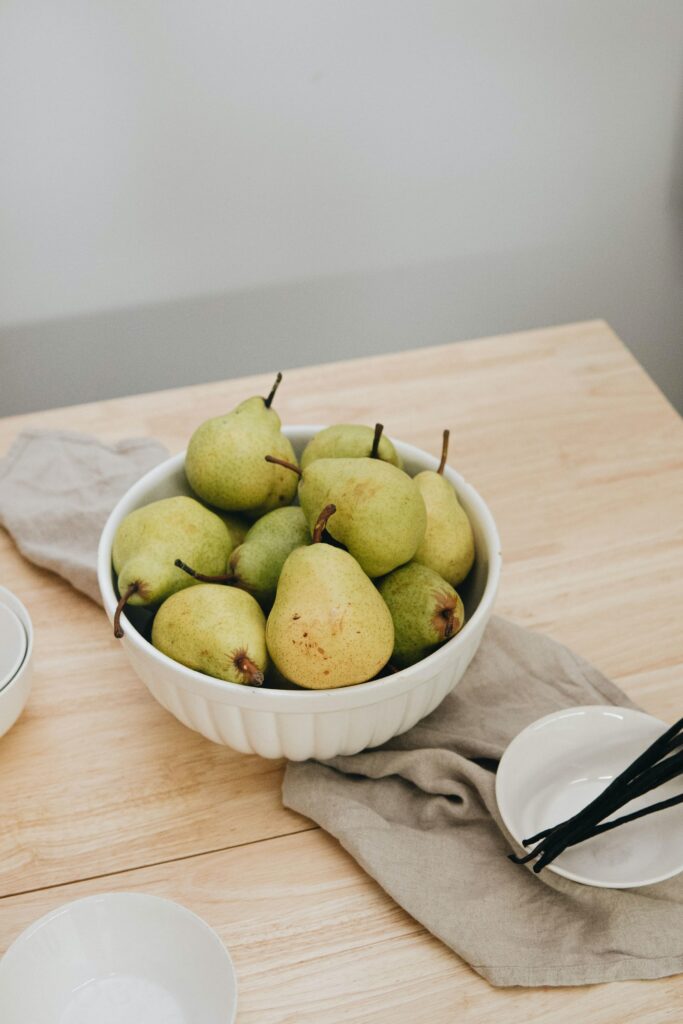
Like apples, pears are at their peak right now, and there are plenty of varieties to choose from. For a cheese plate, go with winter pears like Anjou or Bosc, which pair best with mild cheeses that won’t overpower their flavor. This salad is delicious, and so is this pear crisp. Since a lot of pears don’t change color as they ripen, the easiest way to check is to press gently near the stem. If it gives a little, it’s ready to eat. Skip any with soft spots on the body.
Persimmons
If you’ve never bought a persimmon, November is the month to try one. There are two main types, and the difference matters. Fuyu persimmons are short and squat, and you can eat them while they’re still firm, sliced up like an apple. Hachiya persimmons are taller and acorn-shaped, and they need to be completely soft (almost like a water balloon) before you eat them; otherwise, they’re incredibly astringent. Both are rich in fiber and vitamin A.
Pomegranates
Pomegranates are rich in polyphenols and other antioxidants that help lower inflammation in the body. They’re delicious and so pretty on a holiday table, but getting them open can feel intimidating. The seeds keep in the fridge for about five days, so I like to do a whole one at once and sprinkle them over oatmeal and salads all week.

Vegetables in Season in November
Beets
Beets are one of the most underrated fall vegetables. Roast them whole in foil, then slip the skins off once they cool (the skins rub right off with a paper towel). They’re naturally rich in nitrates, which help with blood flow, and they’re a great addition to a grain bowl with goat cheese and walnuts. Don’t toss the greens, either, since you can sauté them just like chard.
Broccoli
You’ll see broccoli in the grocery store year-round, but it’s a cold-weather crop and tastes best when it’s harvested in the fall. November heads tend to be big and plentiful compared to the smaller bunches you’ll find in warmer months. If steamed broccoli is the only way you’ve had it, there are so many more creative ways to use it, from pasta to curry to pancakes. And once you roast broccoli with salt and nutritional yeast, you may never go back to steaming it.
Brussels Sprouts
Brussels sprouts hit their peak in November, and if you can find them still on the stalk, grab those, since they’ll be the freshest. I love them caramelized with garlic or shaved raw into a salad. Like the other cruciferous veggies on this list, they contain indole-3-carbinol, a compound that can shift how the body metabolizes estrogen. It’s one reason cruciferous veggies come up so often when I’m working with clients on hormone health.
Cabbage
Cabbage might be the best value in the produce section this month. A single head costs a couple of dollars, keeps for weeks in the crisper drawer, and stretches across several meals. Shred it into slaw, toss it into soups or roast thick wedges until the edges char. Red cabbage brings extra antioxidants (and a pop of color that counts toward your three colors if you’re following the 30-3-30 formula).
Carrots
Carrots are a year-round supermarket staple, but they have two growing seasons, with a late-spring crop and a fall crop. The fall carrots tend to be the sweetest, since cooler temperatures cause the roots to convert some of their starch into sugar. You’ll also hear raw carrots recommended for estrogen balance, the idea being that their insoluble fiber helps carry excess estrogen out through the gut. The research there is pretty thin, but a crunchy raw carrot salad is a great way to get more fiber in either way.
Cauliflower
Along with broccoli and Brussels sprouts, cauliflower is another cruciferous veggie with a lot going for it. When it’s roasted, cauliflower takes on a whole new personality: creamy on the inside, a little crispy on the outside, with a sweet nuttiness that’s hard to beat. Beyond side dishes, you can use a cauliflower crust for pizza night or swap in cauliflower rice the next time you make a stir-fry.
Kale and Hearty Greens
Kale, collards, and Swiss chard all thrive in cold weather, and kale gets noticeably sweeter after a frost. If raw kale salads have never been your thing, try massaging the leaves with olive oil, lemon, and salt for a minute or two first, which softens them right up. Hearty greens also hold up well in soups, so stir a few handfuls into whatever’s simmering on the stove this month.
Leeks
Leeks have a summer and a winter season. The winter harvest starts in October and produces a larger, stronger-flavored leek than the warmer-month version. They’ll keep for up to two weeks in the fridge and freeze well, too. Leeks are the main ingredient in leek and potato soup, and they’re also delicious sautéed with chicken, Swiss chard, or spinach. Just slice them first and rinse well, since dirt loves to hide between the layers.
Mushrooms
Cultivated mushrooms are available all year, but fall is peak season for a lot of wild varieties, so keep an eye out for chanterelles and maitake at farmers’ markets and specialty grocers. Mushrooms add a savory, meaty depth to soups, grain bowls, and egg scrambles. They’re also one of the only plant foods that can provide vitamin D, especially when they’ve been exposed to UV light (check the label).
Parsnips
They look like a carrot’s very pale cousin, but parsnips are sweeter and much more versatile. Beyond soup, they’re lovely roasted, braised or pureed, and they make great fries, too.
Sweet Potatoes
Sweet potatoes are harvested in the fall and cured for a few weeks to bring out their sweetness, which is why they taste so good right around Thanksgiving. They’re a great source of fiber and beta-carotene, and they keep for weeks in a cool, dark spot (not the fridge). I’m a big fan of carbs, and sweet potatoes are one of my favorite starches to pair with a solid protein, whether that’s a sheet pan with salmon or a stuffed sweet potato with black beans and ground turkey.
Turnips
Turnips are a fall crop that most people skip, but small ones are tender and mildly sweet. Roast them alongside carrots and parsnips, or mash them half-and-half with potatoes for a lighter take on mashed potatoes. The greens are edible, too.
Winter Squash
Butternut, acorn, delicata, and spaghetti squash are all in their prime this month. They’re budget-friendly, they keep for weeks on the counter, and they show up all over the meal ideas below. Delicata is my weeknight pick since you don’t have to peel it (just slice it into rings and roast).

What’s in Season in Colorado in November
I’m originally from California, and I’ve spent about half my life in Colorado, so I’ve had to learn that our growing season looks pretty different here. Colorado’s main season runs roughly May through November, and by this point, most of what you’ll find locally are storage crops. According to the Colorado Proud produce calendar, November is still a good month for local apples, carrots, onions, potatoes, spinach, and winter squash, along with greenhouse-grown tomatoes and cucumbers. Look for the Colorado Proud logo at the grocery store, and if you’re in the Denver area, many farmers’ markets move indoors for the winter, which is a great way to keep buying local through the holidays.
November Meal Ideas
With seasonal eating in mind, here’s a sample fall meal plan. I built each one around a solid source of protein, because a cozy bowl of soup is a lot more satisfying when it keeps you full until the next meal.
Breakfast Ideas
- Protein-packed oats topped with pomegranate seeds, walnuts, and cinnamon
- A seasonal hash of sautéed yellow onion, cubed butternut squash and chopped kale, with fried eggs and an apple with almond butter on the side
- Coconut chia pudding with pear and ginger (stir in Greek yogurt or a scoop of protein powder to bump up the protein)
Lunch Ideas
- Butternut squash soup topped with soft-boiled eggs, cottage cheese, or shredded chicken
- Apple and maple chicken salad
- Creamy cauliflower and leek soup with a side of white beans or chicken sausage
- Roasted beet and kale grain bowl with goat cheese and a piece of salmon
Dinner Ideas
- Fall harvest salad
- Sheet pan salmon with Brussels sprouts and sweet potatoes
- Stuffed acorn squash with turkey and quinoa
- Charred cabbage wedges with ground beef, mushrooms, and a tahini drizzle
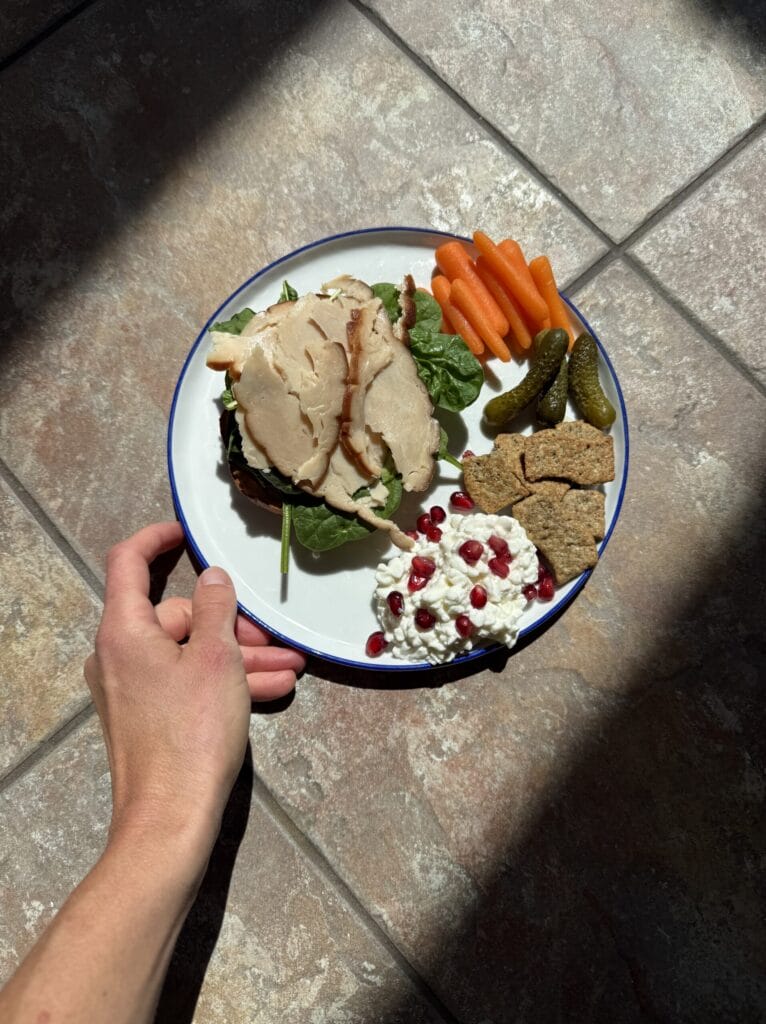
If you like having a simple formula to fall back on instead of a rigid meal plan, the 30-3-30 Method walks you through exactly how to build meals like these on autopilot.

How to Shop for Seasonal Produce on a Budget
Eating seasonally already saves money, since produce is cheapest when there’s plenty of it. Here are a few more ways to keep your grocery bill in check this month.
1. Start With Your Pantry
This time of year, starchy vegetables are a dime a dozen, and they pair perfectly with pantry staples. Before you shop, take inventory. You’ll probably find a box of pasta or a bag of rice that’s close to expiring (great!). Use those grains or legumes as the base for a fall-inspired dinner, then add seasonal veggies and a protein. With staples like chickpeas, beans, and rice, you can build an impressive dish out of a handful of ingredients.
2. Plan Your Meals
Planning your meals helps you skip the packaged items you don’t need and the fresh veggies that end up wilting in the crisper drawer. Pick a few recipes for the week, check what you already have, then write your grocery list. You’ll spend less money and waste less food.
3. Buy in Bulk and Compare Prices
I love buying nut butter, lentil-based pasta, olive oil and organic meat at Costco, and some of the cheapest staples to buy in bulk are oats, beans, rice, frozen vegetables and bananas. It’s also worth comparing prices between your regular grocery store and online options like Thrive Market, and grocery store apps (like Sprouts) are handy for seeing what’s on sale that week. Price per serving is the easiest way to compare, since the bigger package isn’t always the better deal.
4. Shop the Perimeter (and the Frozen Section)
Shopping the perimeter of the store makes it more likely you’ll fill your cart with fruits, veggies, and protein. Processed foods often cost less, partly because the crops they’re made from (mainly corn and wheat) are heavily subsidized in the U.S., but they aren’t nearly as nutrient-dense as whole foods. And don’t skip the freezer aisle. Frozen fruits and veggies are picked and packaged at peak ripeness, they last for months and they’re often cheaper than fresh.
Before You Go
If you want more practical, hype-free nutrition talk like this, come hang out on Daily Deposits, my Substack and podcast. It’s where I go deeper on protein, hormones, and strength training (and share the small daily habits that add up over time). And if you’re ready to put it all into practice, grab the 30-3-30 Method for easy weeknight dinners or The Strong(er) Body Blueprint if building muscle is your focus this season.


