Just like that, we welcome tomatoes and basil with open arms. Inevitably, this month’s produce guide is similar to July’s: you’ll find summer squash, corn, cucumbers, and melons on the menu. This month, berries are plentiful and stone fruit is as sweet as can be. As we enter the dog days of summer, farmers markets are bountiful and home gardens are bursting at the seams. August is an opportunity to welcome simple yet flavorful dishes to the table. As you peruse the produce aisle, take advantage of what catches your eye. Aim for color! There’s no better time to try new recipes. Today, we’re diving into produce in season—August edition. Consider this your cheat sheet for what’s in season this month.

Improve your gut health in august
As we begin closing out summer 2023, there’s no better time to hone in on your gut health. After all, it leads to better digestion, balanced hormones, improved sleep, and much more. Because the bacteria in your gut influence the health of your entire body, it’s important to have a healthy microbiome. Read: a diverse microbiome. Generally speaking, an optimal gut is a diverse gut. The more species of bacteria you have, the more health rewards you reap. So, how to improve your gut health? In part, begin by eating with the seasons.
Eat A Diverse Array Of Whole Foods
This includes those rich in fiber and antioxidants. A diverse diet (sans nutrient-devoid ingredients, like industrial seed oils) can lead to a more diverse microbiome, which is beneficial for your health. When in doubt, focus on the foods in this August 2023 produce guide! They’re chock-full of color and micronutrients.
Prioritize The Mediterranean Diet
There are a variety of reasons to eat like the Mediterraneans do. But mainly because of its emphasis on vegetables, fruits, beans, and legumes. These are high-fiber, gut-friendly foods that promote the growth of beneficial bacteria. Eating a range of fresh, whole foods, mainly from plant sources, is shown to improve gut health.
Choose Fermented Foods
Fermented foods, like plain yogurt, kimchi, and tempeh can benefit the microbiome. They enhance its function and reduce the abundance of disease-causing bacteria in the intestines.
Add In Prebiotics
Many fruits, vegetables, and whole grains contain prebiotics, but they can also be found on their own. Resistant starch (like an unripe banana) can also be a prebiotic. If eating an unripe banana sounds unappetizing, you can also benefit from prebiotics by eating cooked and cooled potatoes and rice. The cooling turns some of the digestible starches into resistant starches.
Consume Probiotics
Beyond probiotic-rich foods, opt for a probiotic supplement. In essence, probiotics are often referred to as the “good”—or “helpful”—bacteria. They help keep your gut humming along. In addition to supporting digestive health, probiotics can also help with overall immune function.
Limit Sugar
Last but not least, we want to keep blood sugar balanced. After all, chronically elevated glucose levels can reduce beneficial bacteria, leading to unwanted conditions like leaky gut syndrome. Consider a meal plan to balance blood sugar as well as swapping common sources of sugar for their lower-glycemic alternatives.
August 2023 PRODUCE GUIDE
Without further ado, let’s dive into this August 2023 produce guide. August is all about end-of-summer fare. Take what’s in season in July and add the following: blackberries, watermelon, and peaches. Now’s the time for stone fruit crumbles, berry pies, and cobblers. In the spirit of keeping up with summer’s most delicious produce, below are the ingredients to focus on in August.
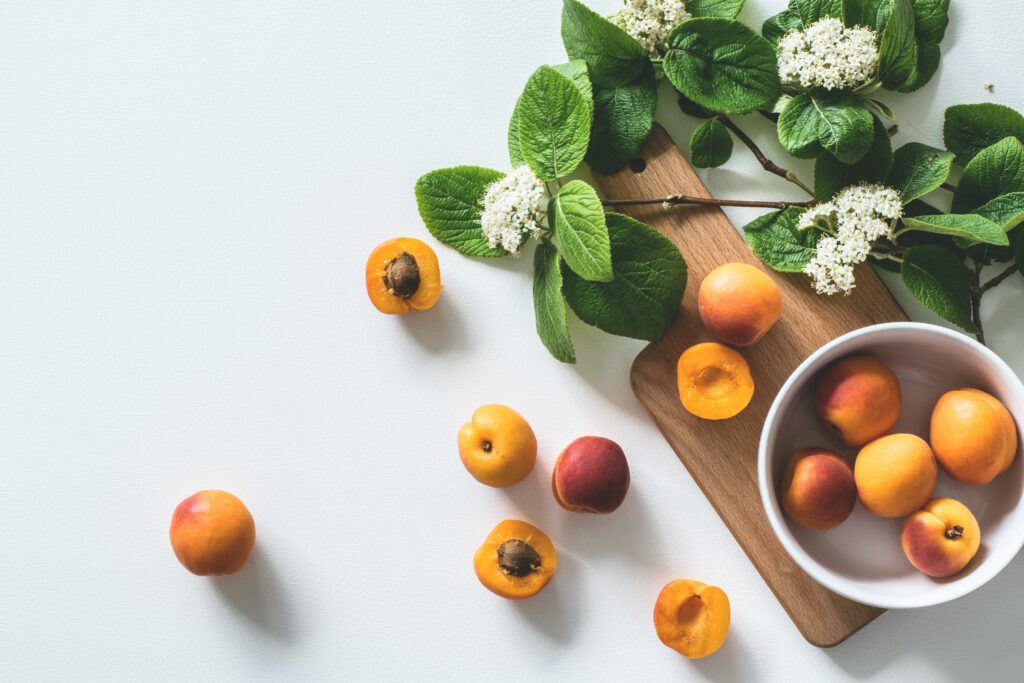
APRICOTS
We’re nearing the end of apricot season, so enjoy these sweet, juicy stone fruits while you can. Apricots resemble a peach or plum in taste, with a yellow-orange flesh. They have a lightly fuzzy skin and a large seed inside. Look for apricots that have a deep orange-gold color—rather than those that are pale orange or yellow. They should be plump and firm, with just a little softness to them.
BLACKBERRIES
These delicious fruits offer several health benefits, and they capture the essence of summer in their sweetness. They’re packed with vitamin C, fiber, and antioxidants. Enjoy them on ice cream, yogurt, in smoothies, in salads, or atop cottage cheese. Juicy, sweet blackberries are a snack in themselves, but they’re also lovely on chia pudding and make a simple dessert when served with whipped cream. As a general rule, buy organic berries (berries are high on the Dirty Dozen list!).
CArrots
While they’re a year-round supermarket staple, carrots actually have two seasons. There’s a late-spring crop as well as a fall crop. Early season carrots are sown in the winter and very early spring and protected with plastic or fleece covers. They are harvested from June through to August. Green top carrots are sown in the open ground in spring and are harvested from August until the first frosts start to appear. Raw carrots are fantastic for balancing hormones (especially if you’re estrogen dominant)!
Cherries
Cherry season starts in June, and typically lasts through August. They’re one of the best fruits to balance blood sugar (along with berries and citrus!).
CORN
Here in Colorado, corn is in full swing. Now’s the time to grill it and enjoy in a salad with chicken, fish, steak, or tofu.
CUCUMBERS
Cucumbers require a long growing season, but most are at peak picking in August. Look for firm cucumbers, without blemishes or soft spots (which can indicate that they’ve started to rot). Cucumbers should be dark green without any yellow spots. My favorite are Persian cucumbers—they’re delicious in salads, with hummus, and pickled!
MANGOES
Don’t forget about mangoes! The most commonly consumed fruit (world-wide), mangos are high in vitamin A and C. There are many, many different varieties, but mangoes are best when they have a sweet aroma and feel slightly soft, yet firm to touch. Mangoes are delicious in smoothies, salads, salsa, and alongside a protein-forward breakfast.
Peaches
Thanks to all of our sunshine in Colorado, we enjoy a long peach season (running from late-June through early October). Many of the peaches harvested in Colorado orchards are of the juicy freestone variety. Palisade peaches are a must! That said, many peach varieties are grown in a number of regions through the U.S.
PEPPERS
Nothing beats a bell pepper at the peak of the growing season―which runs from July through November―when it’s crisp, juicy, and full of sharp flavor. I’m currently on a grilled pepper kick, but they’re perfect with hummus, baba ganoush, or tzatziki. Add them to salads or sandwiches. Stuffed peppers are so satisfying, too.
RASPBERRIES
All hail the mighty raspberry. Juicy, perfectly sweet, and a wonderful addition to everything from salads to a bowl of ice cream, raspberries are as versatile as they are nutrient-rich. Choose berries that have a bright red color. Raspberries should always be refrigerated and kept dry until just before serving. Be sure to properly store your raspberries. See here for my producing storing tips!
SUMMER SQUASH
As with July, August is the perfect time to savor just-harvested summer squash. Summer squash’s peak season is June through late August. I love adding this versatile ingredient to stir-fries, frittatas, and fish en papillote.
TOMATOES
These juicy, versatile fruits (yes, fruits!) are irresistible in the summer. This is my favorite way to eat heirloom tomatoes, but this caprese salad with avocado is a weekly staple.
WATERMELON
Last but not least, watermelon. Sweet and succulent, a good watermelon is the best thirst-quenching treat on a hot summer day. Watermelons don’t continue to ripen once they’re cut from the vine, so you want to be careful when choosing. Check where the stem used to be. Make sure it’s brown (green means it was picked too early). Then, look at the other side for a yellow patch. The ripest watermelons have the yellowest spots. Lastly, a ripe watermelon will feel heavy for its size. It should give a little when you gently squeeze it. A rock-hard watermelon is underripe.

Images courtesy of Unsplash. This article contains affiliate links. Thank you for supporting Wellness with Edie.



Leave a Reply