

The Best Foods to Support Your Luteal Phase
The secret weapon to hormone balance? What you eat. Numerous studies have shown that nutrition has a direct impact on hormone health. But proper nourishment becomes an afterthought—between the busyness of work and other responsibilities. In turn, we (inevitably!) reach for what’s convenient. And often, what’s convenient is packed with underwhelming ingredients. But nourishing foods are integral to achieving a normal period. Nutrition also significantly improves fertility! With the follicular phase under your belt, let’s focus on the other half of the menstrual cycle. Enter the luteal phase. Read on to learn about foods to eat during the luteal phase.
P.s. My protein eBook is now available! With protein as the focal point, this guide covers it all—how much protein you need to balance your hormones, animal vs. plant-based sources, how to choose the best protein bars, and so much more. Grab your copy here! Plus, it includes 30 (brand new) protein-rich recipes to spark creativity in the kitchen.
4 Phases of the Menstrual Cycle
Just like the seasons, a woman’s menstrual cycle has four distinct phases: menstrual, follicular, ovulatory, and luteal. It begins on the first day of your period (when you bleed) and ends the day before your period starts again. A healthy cycle is roughly 28 days. Some women have a 25-day cycle, and some have upwards of a 35-day cycle. Keep in mind that anything outside these ranges is potentially abnormal.
• Menstrual: the start of your period (days 1-6)
• Follicular: 7-10 days leading up to ovulation
• Ovulatory: 3-5 days of ovulation
• Luteal: 10-14 days before your period
Keep in mind that these are ranges. Every woman’s cycle varies in length, so the four phases may be shorter or longer than what’s listed above. If your luteal phase is short, long, or painful, download my hormone-balancing menstrual cycle eBook.
What is the Luteal Phase?
Following ovulation, your body enters the luteal phase. It typically lasts 11-17 days. During the second half of your menstrual cycle—the luteal phase—estrogen and progesterone decrease. Because of this, your cervical fluid is either sticky and white or barely there. If you’re new to monitoring your cervical fluid, it’s a natural way either to track your fertility or prevent pregnancy. Speaking of pregnancy, the window is narrow while you can get pregnant in the luteal phase. Once you’ve ovulated, the egg can only survive for 12-24 hours. Meaning, you can only get pregnant in the first 24 hours of the luteal phase.
Do You Need More Calories During the Luteal Phase?
Yes! While I’m an advocate of always honoring your hunger, it’s especially important to pay attention to your appetite during the luteal phase. The reason is that we require 100-300 more calories every day during this phase. Why? Because our basal metabolic rate (the number of daily calories required to stay alive) increases by 10-20%. Additionally, this increase in calories has to do with progesterone. As progesterone rises during the luteal phase, it signals the body to consume more energy. Said differently: progesterone is correlated to an increase in hunger. Many women notice an increase in appetite before their period starts. This is no coincidence. We need more fuel before bleeding begins—an energy-intensive phase.

5 Nutrients to Eat During the Second Half of Your Cycle
As a whole, it’s always beneficial to aim for a wide variety of nutrients. They help boost mood, support stable blood sugar, minimize nutrient deficiencies, balance hormones, and support sleep. During the luteal phase, specifically, you want to focus on nutrients like magnesium, calcium, folate, vitamin C, and protein. Foods to eat during the luteal phase include nuts, seeds, legumes, beans, whole grains, avocado, yogurt, and high-quality animal protein.
Magnesium
Foods with magnesium can help lower anxiety and water retention, as well as promote sleep. Research also shows that magnesium can alleviate PMS symptoms. In part due to its ability to regulate certain stress hormones. Magnesium-rich foods include nuts—especially almonds, cashews, and walnuts—dark leafy greens, spinach, black beans, whole grains, avocados, pumpkin seeds, and dark chocolate.
Calcium
One study shows that among 66 female students who suffered from PMS symptoms, those who took 500 milligrams of calcium experienced lowered symptoms of anxiety, depression, and water retention (compared to the placebo group). Rather than reaching for a supplement, though, consider implementing more calcium-rich foods into your diet. Some options include sunflower seeds, beans, lentils, chia seeds, edamame, and yogurt.
Folate
Vitamin B9—also known as folate—is one of the eight B vitamins. Scientists have repeatedly shown that folate plays a role in setting the length of the menstrual cycle (it stabilizes it). In essence, low levels of folate are significantly associated with decreased levels of progesterone during the luteal phase. This leads to a slew of consequences, including a shorter menstrual cycle. We also need adequate progesterone in order to create a healthy environment for egg implantation and fetal growth. Even if you aren’t trying to get pregnant, have enough folate keeps your menstrual cycle regular. You’ll find folate in Romaine lettuce, asparagus, Brussels sprouts, broccoli, beans, peanuts, sunflower seeds, whole grains, and seafood.
Vitamin C
Ascorbic acid (also known as vitamin C) is important not only for immune health but also for a healthy luteal phase. For women with a short luteal phase, make sure you’re eating enough vitamin C! Along with folate’s ability to increase progesterone, naturally, vitamin C can also do the same. In one study, women taking vitamin C supplements (750 mg/day) for just 3 weeks had significantly improved progesterone levels in 53% (40/76) of women. Foods rich in vitamin C include guavas, bell peppers, kiwi, strawberries, oranges, papaya, broccoli, tomatoes, and Brussels sprouts.
Protein
Last but not least, protein. You’ll need plenty of protein during the luteal stage to assist with maintaining muscle and strength—as your body prepares to bleed during your period. Protein is also necessary for balancing blood sugar. Foods to eat during the luteal phase include poultry, fish, non-GMO tofu, eggs, beans, lentils, and chickpeas. These foods are filling, satiating, and versatile!
Meal Ideas for Your Luteal Phase
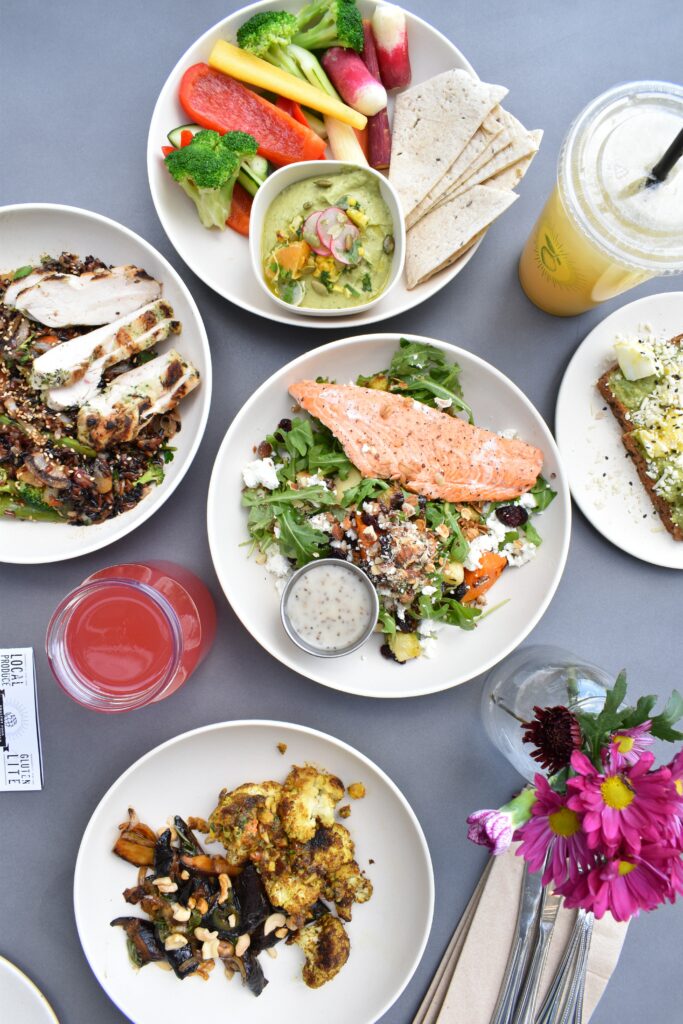
BREAKFAST
Scramble pastured eggs (or non-GMO tempeh) with spinach, ghee, sea salt, and nutritional yeast. Enjoy with a small roasted sweet potato, topped with sea salt, a few teaspoons of tahini, and a sprinkle of chia seeds. Wondering about coffee and hormones? See here!
LUNCH
Greek-inspired salad with Romaine, arugula, shredded chicken (sub lentils), kalamata olives, feta cheese, tomatoes, chickpeas, lemon juice, balsamic vinegar, and extra-virgin olive oil; serve with a side of seedy crackers or lentil chips.
DINNER
Sheet pan dinner—wild-caught salmon, cauliflower florets, and chopped delicata squash (roast in avocado oil with seasonings of choice). Serve with a side of avocado topped with hemp seeds. Sub salmon for cannellini beans and wild rice, if plant-based.
SNACKS / DESSERT
Seedy crackers + full-fat cottage cheese; carrots + hummus; popcorn + walnuts; chocolate truffles + strawberries; B.T.R. Nation bar. Pick and choose based on your cravings and hunger!
For meat, dairy, and these veggies, opt for pasture-raised / organic—whenever possible.
Your Luteal Phase Power Plate: Foods & Combos for Hormone Balance
This chart is your go-to guide for nourishing your body during the luteal phase. It highlights foods rich in healthy fats, fiber, magnesium, and vitamin B6—all of which support hormone production, reduce PMS symptoms, and keep your energy steady! From seed toppings to nutrient-packed meal ideas, these simple food combinations make it easy to eat in sync with your cycle (while optimizing hormone balance, naturally).

Seed Cycle for Hormone Health
Have you tried seed cycling? This popular wellness trend involves incorporating specific seeds into your diet—flax and pumpkin seeds during one part of the month, and sesame and sunflower seeds during another. The idea is that seed cycling can support your body’s natural hormonal rhythms by promoting or balancing estrogen and progesterone levels. It’s also said to help alleviate symptoms caused by hormonal imbalances. The simplest way to get started? Funk It Wellness! They make seed cycling effortless by preparing everything for you—no need to buy or grind seeds yourself. Plus, you can save on your purchase with my code ‘EDIE15’ at checkout. During the luteal phase, sesame and sunflower seeds are the go-to choices.
Hormone Balance Guide
Ready to take the next step in your hormone-healing journey? Grab your copy of Master Your Menstrual Cycle—my holistic guide to balancing your hormones with ease.
This article is for informational purposes only. It is not, nor is it intended to be, a substitute for professional medical advice, diagnosis, or treatment, and we recommend that you always consult with your healthcare provider.


